
A community engagement initiative of Litchfield CUSD #12.
Summer | 2026
Wearing Every Hat
"As an alum and a mom and a teaching professional, I had all those different viewpoints when I went into this."
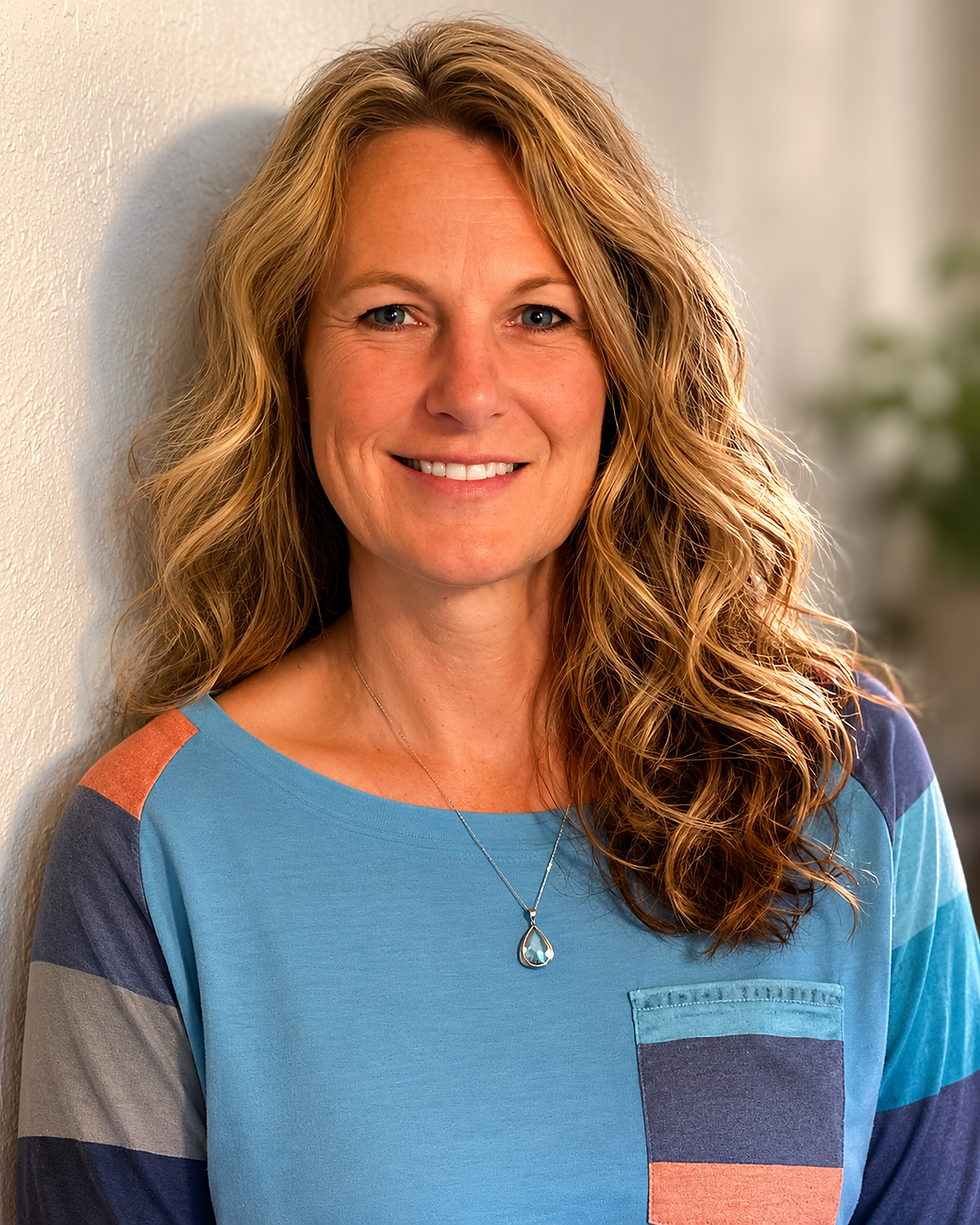
When Teresa Komor walked into Litchfield Schools' strategic planning meetings, she didn't arrive with a single perspective. She arrived with several.
She was a Class of 1996 alumna who had lived in Litchfield nearly her entire life, with eight years away in Mount Olive before coming home. She was a parent: two graduates already out in the world, a son finishing his freshman year. She was a taxpayer who had watched the district evolve over decades. And she was a twenty-three-year classroom veteran — a first-grade teacher in Mount Olive — who understood from the inside what it costs when vision outruns implementation.
That last perspective was what made her participation unusual. Most community members arrive at strategic planning sessions with hopes for the future. Teresa arrived, also carrying an advocate's concern for the people who would have to carry those hopes out. "I know how sometimes the higher-ups get these ideas in their heads, and then the poor teachers have to carry out these huge workloads." She wanted any vision that emerged to be realistic enough to actually survive contact with a real school day.
Her children had given her a ground-level view of what Litchfield produces. Her oldest son chose Eureka College deliberately — a small, private institution where he could replicate the close-knit atmosphere he'd valued in high school. "I don't want to be one of thousands. I want to be one of just hundreds. And I want to know my classmates." Her daughter recently left for Washington State to work as a wildland firefighter. Her youngest son pole vaults, plays in the band, runs track, and stays active in FFA — the kind of kid who seems incapable of doing less than everything.
Each had found a different path. Each had carried the same foundation out the door.
The planning process itself impressed her. The room was intentionally diverse: community members who might one day interview Litchfield graduates for jobs, staff who knew the internal strengths and gaps, parents seeing the district through their children's eyes. And then the students.
"They were just really outstanding kids. Smart kids, well-mannered, well-spoken kids." They came in quietly at first — a room full of adults is a lot to walk into — but when they understood the invitation was genuine, "they jumped in and participated."
The conversations kept circling back to the same qualities. What should a Litchfield graduate look like? Empathy kept coming up. Problem-solving. Critical thinking. Those weren't words handed to participants; they kept emerging independently from different corners of the room, which is how you know they mean something.
By April, the last meeting had wrapped. The committee polished its work and handed it to students and administrators to present to the school board. A week later, Teresa saw it in the board minutes. "That was kind of cool" — watching something that had begun around tables at evening meetings become an official part of the district's record.
Litchfield, Teresa believes, has more to offer than people sometimes recognize. It sits halfway between Springfield and St. Louis, right off the interstate, with enough infrastructure to be genuinely convenient and enough small-town character to still feel like home. Route 66 runs through it, and 2026 is a milestone year for the old highway — the community's history running straight through the national story. "It's a good mix of a small-town vibe, but yet it's a growing community."
She hopes the work the committee did doesn't sit in a folder. From what she's seen, she doesn't think it will. The voices in that room were too varied and too earnest. The goals that emerged felt too genuinely shared. And the superintendent who organized it all seems, in Teresa's read, to be someone who came to build something, not to hold the spot.
She'll be watching. She always has been.