
A community engagement initiative of Litchfield CUSD #12.
Summer | 2026
The Future Had a Seat at the Table
"It was refreshing to see that so many people care about Litchfield and the next five years."
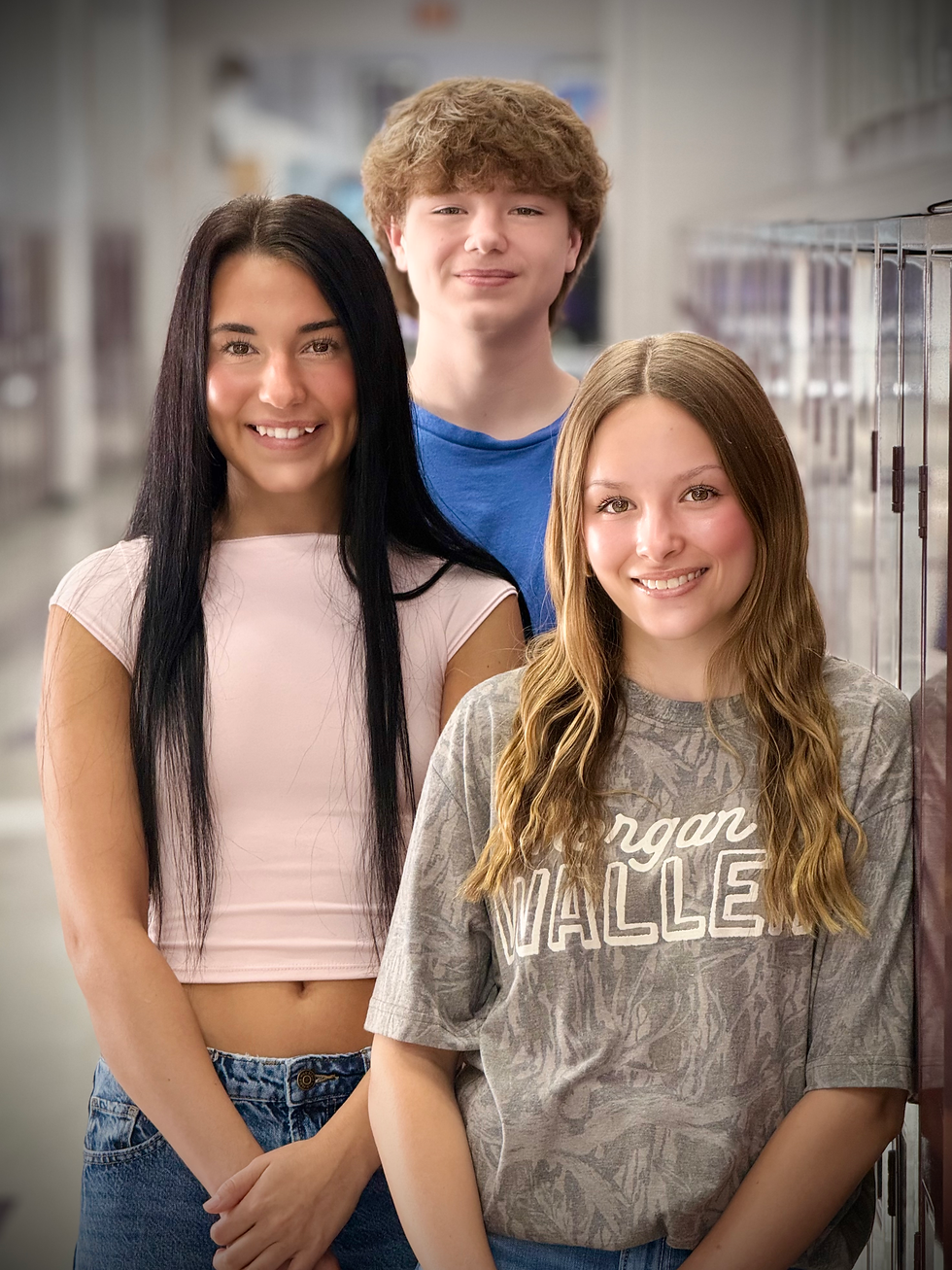
When adults gather to plan the future of schools, they usually spend a lot of time discussing students. They don't always remember to invite them.
Litchfield's Community Planning Committee did.
Paityn Buzick, Faith Ellinger, and Parker Bishop were brought in as student voices — not observers, not window dressing, but contributors. They arrived at different points in the process and with different perspectives, which turned out to be exactly the point.
Paityn is a graduating senior — cheerleader, Student Council vice president, honors and dual-credit student — who in the fall will become the first person in her family to attend college, heading to the University of Mississippi to study biochemistry. She came in at the final three meetings. "It definitely puts a lot of pressure on me," she said of the first-gen milestone. "I'm really excited and all my family's supporting me, but it's definitely a little pressuring."
Faith is a junior, golf and cheer athlete, junior class vice president, and the student who showed up most consistently — five of the six meetings, leaving early when a game conflicted rather than skipping entirely. She wants to be a veterinarian and has been looking at the University of Illinois, which has one of the top veterinary programs in the country. Parker is a sophomore, still in exploration mode, drawn toward technology and cybersecurity, described by Craig during their conversation as an increasingly important field with major employers in the St. Louis area.
When asked what she contributed to the room, Faith's answer was direct: she knew what school actually felt like in 2026, from the inside. "The people who were in the room were out of school. They didn’t have the perspective that a student had. She wasn't intimidated. "I walked in and felt confident being apart of the group. The adults were welcoming and easy to talk to. . They wanted us to be there, and they wanted to hear our voices and our opinions and see what we could bring to the table."
What the students found, across those sessions, was a room of adults working harder than they expected. Faith had a read on it early. "I knew that they would get it done because they just seemed so adamant about it, and they really cared about everything. It was just really nice to be a part of something like that big."
Paityn noticed the diversity of commitment in the room. "It was definitely refreshing to see a good group of people from the community and from the school that was just so motivated" — motivated around a shared goal for the next five years of the district. That so many adults she recognized, outside of their normal roles, were choosing to show up for this felt like something worth noting. "It was refreshing to see that so many people care about Litchfield and the next five years."
Parker's framing was simpler and landed with its own kind of weight. When he explained the experience to people at home, he kept it plain: "It was talking about the future of our town."
He also, when asked to describe what makes Litchfield what it is, reached for a phrase that captures something the planning process itself is designed to protect: "Everyone's just so welcoming. Everyone knows everyone. I feel like it's just a town tied together by the people."
Three students. A senior heading to Mississippi. A junior aiming for veterinary school. A sophomore still deciding. Together, they brought something the adults in the room couldn't supply on their own — the daily, lived experience of being a student in this district right now, in this year, at this particular moment in the life of the community.
That's not a small thing to bring to the table.