
A community engagement initiative of Litchfield CUSD #12.
Summer | 2026
Coming Home with Purpose
"There are a lot of things going on in families and homes that aren't discussed or seen."
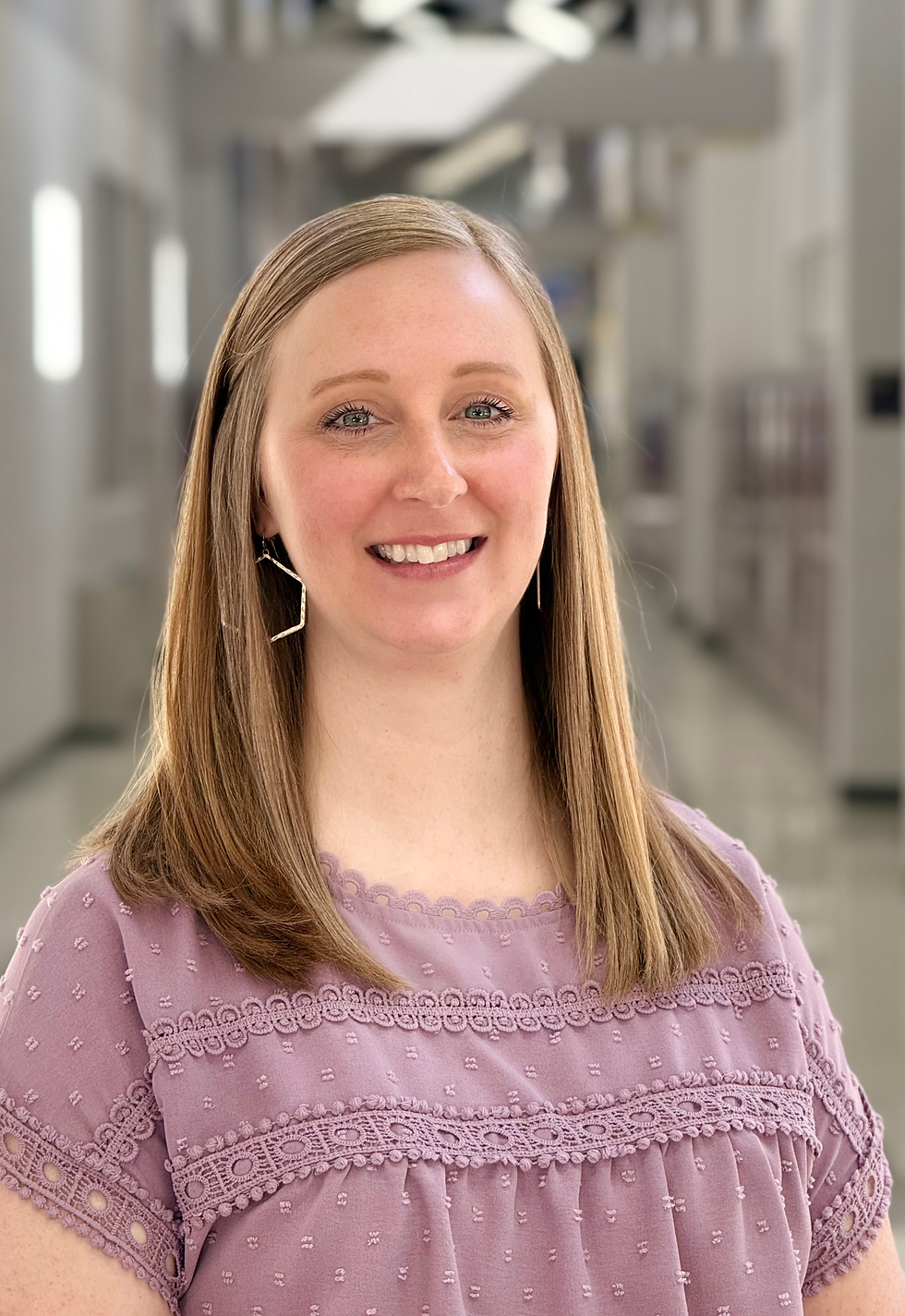
Kristina Blake moved back to Litchfield while she was pregnant, in the middle of a pandemic, with a seven-year-old daughter, a two year old and a third child on the way. She and her husband — he's from Albion, they'd spent nearly twenty years in the Metro East — had decided they wanted something smaller, safer, and more rooted. Her family was here. Her Class of 2002 was here. Her mother, a retired first-grade teacher, was here. Her father's business — Nail’s Power Equipment, a local turf and tractor dealership — was here. Her husband came along and went to work for his father-in-law.
Five years in, she'll tell you the call was right.
Kristina is a Licensed Clinical Social Worker and manages several runaway and homeless youth programs for Brightpoint, a statewide organization that serves Montgomery County, among others. The work puts her at the intersection of housing instability, family fracture, and the quiet emergencies that don't show up in a report until something breaks. She knows, professionally, the difference between a family whose Ameren bill is never at risk and a family for whom that question is life every month. "I think sometimes they get forgotten," she said.
That awareness is exactly what Kristina brought to Litchfield's Community Planning Committee — alongside her identity as a parent, an alumna, and someone with skin in the game three generations deep. When Dr. McLean's office put out the call, Kristina saw an extension of the kind of strategic planning she does in her own workplace, just with a different table.
One conversation in the room kept pulling her attention: truancy. It's easy to read absenteeism as apathy, she said, but the reality is often harder to see. "It's not just that they overslept or they don't want to go to school. There are a lot of things going on in families and homes that aren't discussed or seen." Truancy is sometimes the symptom of something nobody at school knows about.
Her broader argument was for family engagement — not as an afterthought but as a strategy. "I'm just a huge proponent of family engagement." The more connected families feel to a school, the more they recognize its value, and the more likely that appreciation travels to their children. She acknowledges it's a complicated sell. Some families carry bad memories of their own school experiences. Some are stretched too thin. Some, shaped by years of cultural pressure toward defensiveness, have stopped seeing teachers as partners and started treating them as adversaries. She watched that shift during her own years as a student and in her years working with families since: the parent who once came to school to back up the teacher now sometimes comes to school to undo the teacher's work.
The students in the room offered something the adults couldn't. Near the end of the process, as they grew more comfortable, they started naming things grown-ups had overlooked. "They had some really great insights that us old folks might not think about," Kristina said.
At home, her professional life shapes her parenting. Her daughter is twelve and does not have a cell phone. Kristina works with young people whose mental health has been bent by social comparison and digital pressure, and she and her husband have decided they don't want to introduce those variables until their daughter is steadier on her feet. "You are at the critical age where peer pressure is going to hit hard," she said. She's seen what comes next often enough not to want to risk it.
What she hopes the planning process ultimately produces is a community with more empathy — not as a platitude, but as a practiced orientation. Empathy for the family nobody sees. For the kid who can't explain why she's absent. For the student who is ahead and the one who is behind. She came home because Litchfield was where her people are. The planning committee is her way of making sure it stays a place worth coming home to.