
A community engagement initiative of Byron CUSD 226.
Winter | 2026
The Girl Who Asked How the Universe Began
"I know I tried my best—I just didn't think it would get me this far."
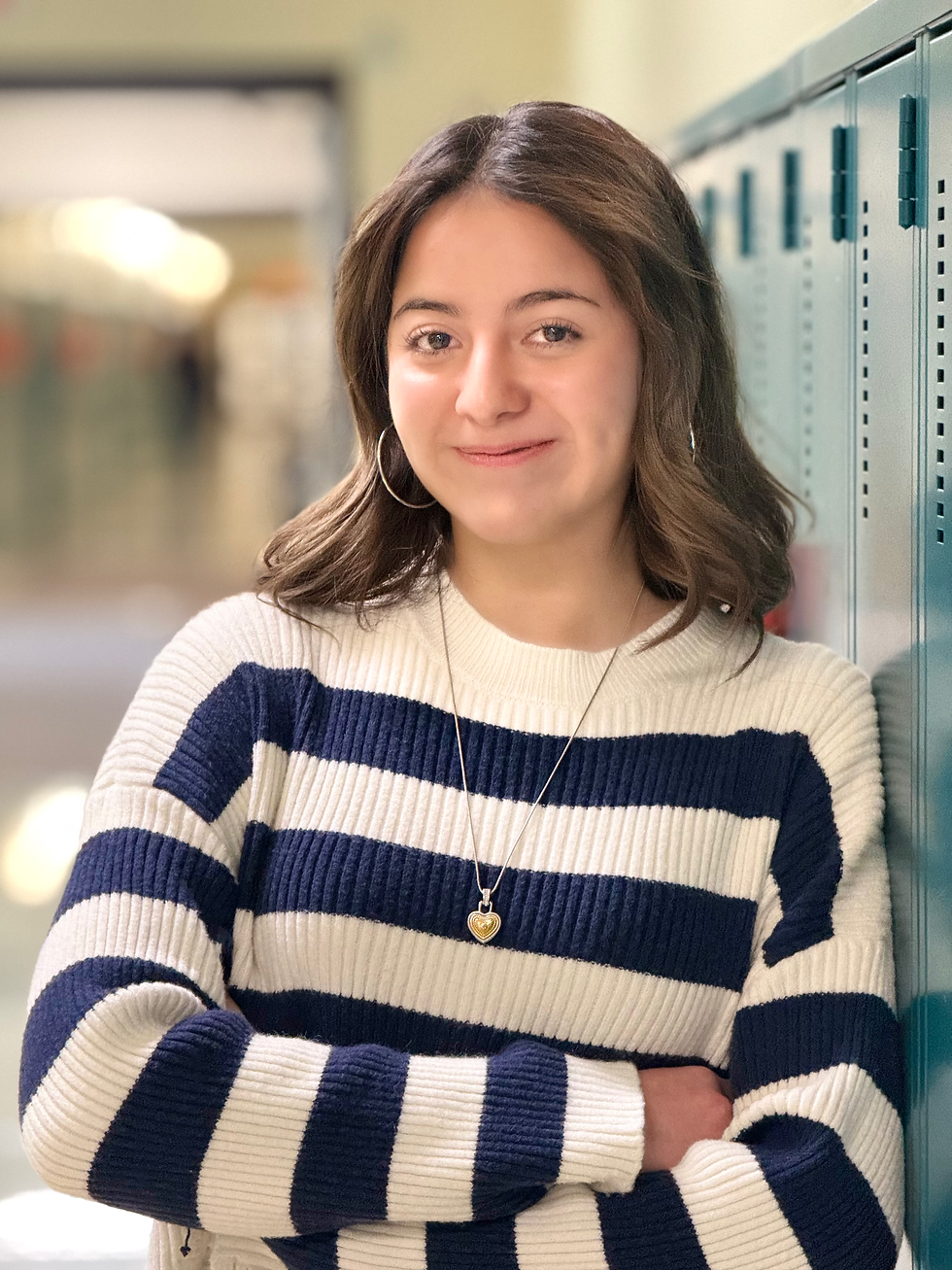
When Avril Silva was six years old in Jalisco, Mexico, she asked a question most people spend their whole lives circling: ¿Cómo se creó el universo?—How was the universe created?
Her grandmother answered with the Bible. "Dios el gran creador," she said—God the great creator—and began reading. Her uncle answered with the Big Bang. Between those two responses—one spiritual, one scientific—something in Avril awakened. A lifelong curiosity. A desire to understand. A recognition that contradictory answers weren't something to fear but something to explore.
That six-year-old is now a Byron High School senior preparing to study astrophysics at Columbia University in New York City. And if you trace the arc of her story—from Mexico to the United States in fourth grade, then to Byron in sixth grade, through 14 moves, across cultural and economic barriers, all the way to an Ivy League match through QuestBridge—what emerges is a portrait of courage rooted in quiet conviction.
Avril remembers sitting in the counselor's office her sophomore year when Amber Swanson mentioned QuestBridge, a program that might change her future. She completed the College Prep program as a junior and tackled the National College Match application her senior year—three essays, including one about her life in Mexico and that childhood question to her grandmother.
Avril speaks about science the way some people speak about art. "There are so many unknowns," she says. "We may never get a precise answer. But that doesn't mean we stop trying." A hundred years from now, she says, we may realize that some of what we thought was true wasn't. And that's not a failure. "I've always seen science as more of a practice than an actual topic."
She is the oldest of four children—Alex is 8, Ashley is 6, and little Aaron is 3—and she feels the weight of being the example they watch. "I didn't really have a lot of people in my family to talk to about this whole process," she says. "I just hope that in the future I'll be the person to help them through it." In Mexico, she knew education was a luxury. "If I made it through high school, that would have been great," she says. "College and university, that was just a reach."
Her quinceañera wasn't the elaborate celebration it might have been in Jalisco or Michoacán. Without extended family present, she chose a small gathering at home. But the essence of the moment was still there—the pivot between childhood and maturity, the first serious discussions about her future.
When she matched with Columbia, she started calling people the way someone rings a bell to announce good news across a village. "As soon as I found out, I told Mrs. Swanson, and I called my mom as I was going to Mrs. Swanson's office. I called my dad, I texted my grandma, I texted everybody," she says. "And as soon as I got home, I had like three or four hours of video calls." Her grandmother in Mexico cried tears of joy. For Avril's family, this wasn't just her achievement. It was a generational turning point.
At Byron, Avril plays clarinet in the symphonic band, concert band, jazz band, and honor ensembles. She competes on the speech team, writing original oratories about immigration and performing dramatic duos. Her current duo, set in 1969, explores feminism—Avril plays a mother who doesn't understand why her teenage daughter is burning her bras.
She is deeply aware of the cultural tensions around immigration, yet refuses to be defined by fear. "I can't control external factors," she says. "I can only control myself. So I keep going. I keep my head high."
And she believes in the United States as a living idea. "One of the biggest images of the United States that I had even before moving here was that it was meant to be a melting pot community," she says. "You never know what impact someone will have on a community. It could be worth a try."
Avril Silva will soon walk the streets of New York City—a place humming with languages, cultures, and ideas—and carry with her the wisdom of her grandmother, the curiosity of her uncle, the steadiness of her parents, and the fire that has always been her own. She's excited to return to that "loud, lively environment" of city life.
She is ready to put her dent in the universe.