
A community engagement initiative of Joppa-Maple Grove Unit District 38.
Spring | 2026
The Little Banker in Room Five
"Now I just find quarters and put it in my dress."
%20and%20Jesse%20Dummitt%20(Teacher)_heic.png)
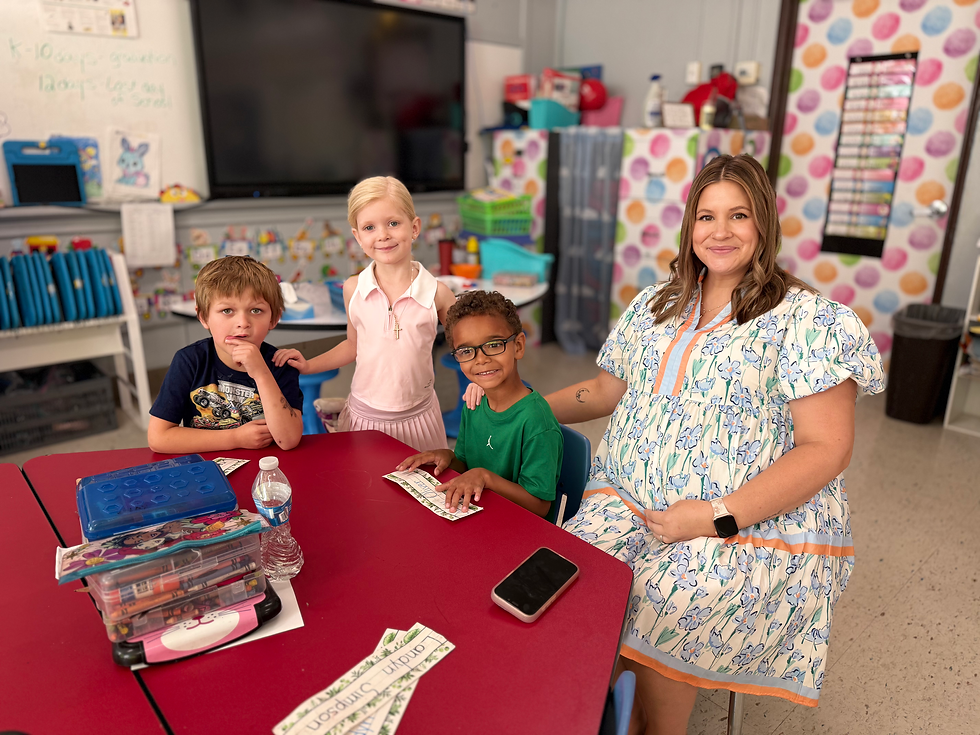
Rosie Dummitt is in kindergarten. She has a savings account at City National Bank. She has won a prize through the school's banking program. And her current investment strategy involves finding quarters and putting them in her dress.
She also has a big dog. She wanted that noted.
Every Wednesday morning at Joppa Elementary, a representative named Maria from City National Bank comes to the school. Any student with a savings account — kindergarten through junior high — can walk in with coins, bills, or a deposit slip and make a deposit. Each student gets a savings booklet to track their balance. Every depositor's name goes into a prize drawing. Sometimes there are toys. Sometimes City National brings an ice cream trike to the playground and gives the whole school treats. This year, the bank is taking the fifth graders to Kingsway Skate Park as a thank-you for participating.
The program used to live in sixth grade. When sixth grade moved up to the junior high building, Rosie's mom saw an opening.
"Went ahead and snuck in there and snatched it up," said Jesse Dummitt, who teaches fifth grade at Joppa Elementary. "Good fifth-grade experience for them."
Now Jesse's fifth graders don't just participate in the program — they run part of it. She picks two students each Wednesday to serve as bank tellers. They set up desks, organize the deposit slips, help younger students fill them out, add the decimals, and record the balances.
"We create a waiting room ambiance," Jesse said. "The kids come in, they fill out their name, and the deposit slips. They're showing them how to fill those out, adding those decimals, putting them in the book."
It's math — real math, with real money and real consequences if the decimal lands in the wrong spot. And it maps directly to classroom standards without anyone having to pretend it does.
The deposits are small. Sometimes a dollar. Sometimes, a kid finds loose change in the couch cushions. But the point isn't the amount. The point is that a first grader who makes a deposit on Wednesday starts thinking of herself as someone who saves. And that identity sticks.
Jesse has watched it happen over the years. One current eighth grader has maintained the same account since first or second grade. Every Wednesday for seven years, a dollar here, some change there, all of it quietly accumulating.
"When they become 18, they can even change it to a debit card and a checking account," Jesse said. "So it actually sets them up for success for having access to it later on in life."
The program also teaches compound interest — money growing while it sits still. Jesse talks to her students about it. Rosie, at five or six, isn't quite there yet on the concept. But she understands the basics.
Why is it important to save money?
"To get a new house," Rosie said.
And food?
"Yes."
Trips?
"Yeah."
She used to have a piggy bank. Now she has a real account at a real bank, managed by a real banker named Maria who shows up every Wednesday and knows her by name. She's won a prize. She's made deposits. She finds quarters wherever quarters hide and puts them in her dress until Wednesday comes.
Near the end of the conversation, Rosie mentioned one more thing about herself.
"I like to make things at my house," she said.
A kindergartner who saves her quarters, deposits them at school, and likes to make things. That's about as good a foundation as anyone could ask for.