
A community engagement initiative of Joppa-Maple Grove Unit District 38.
Spring | 2026
The Fifth Graders Who Tested Everything
"When I go outside, I get to remind myself the day's almost over."
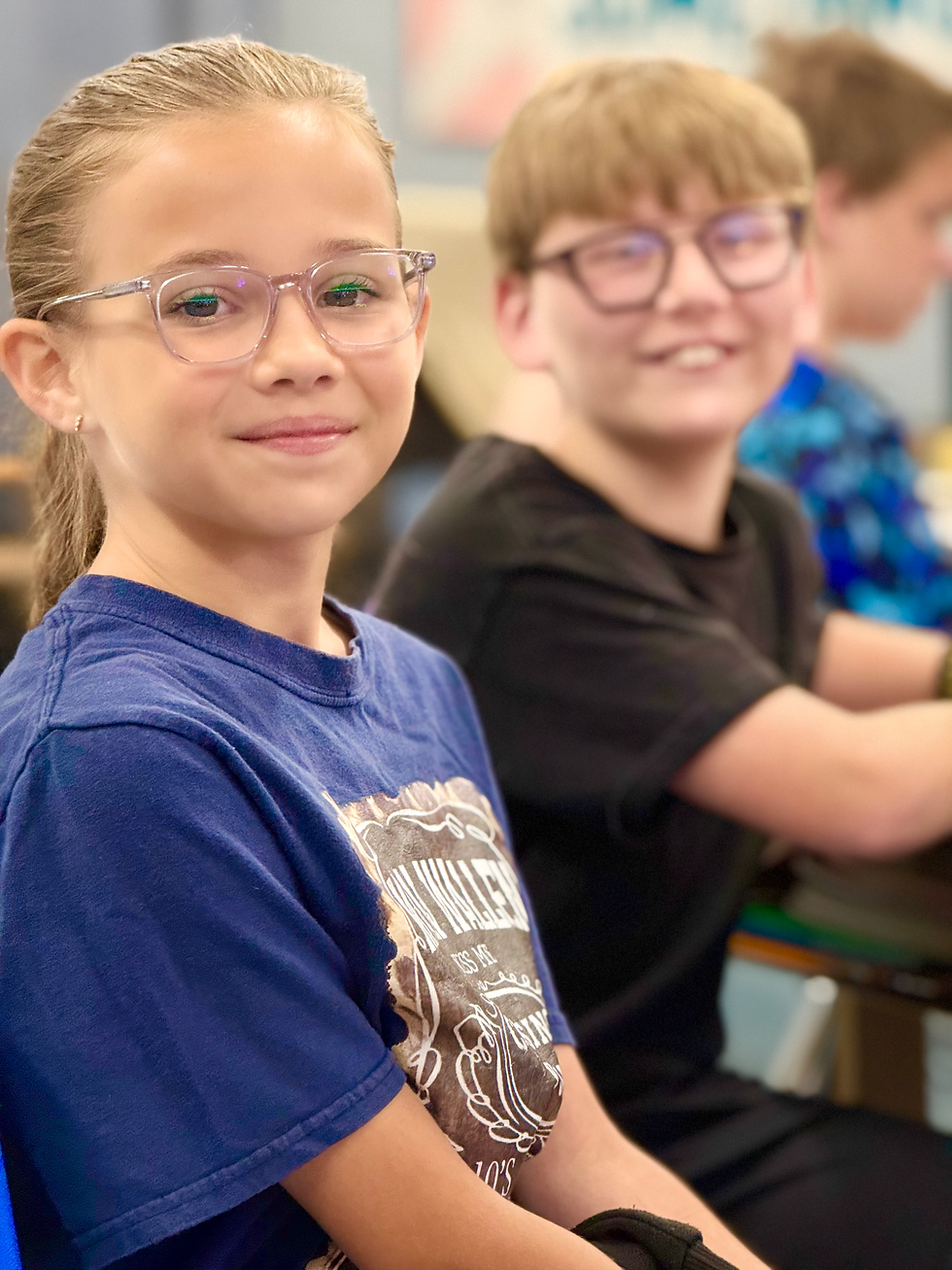
Kinsley VanMeter's hypothesis was personal: she figured Rudy Special chicken feed would produce bigger, better eggs than Kalmbach — because Rudy Special was the brand her own chickens ate at home.
She was wrong.
The Joppa fifth grader's science fair project compared the two feeds across several variables: egg size, shell strength, shape, and yolk appearance. She sampled one egg per brand, photographed each one, cracked them into separate cups, and compared the results side by side.
The yolks told the story.
"The yolk for the Kalmbach one was orange," Kinsley said. "But for the Rudy Special one, the yolk was yellow."
The shapes looked different too — one more oval, one more rounded. Shell hardness was harder to measure on camera, and Kinsley already knows how she'd fix that next time.
"We could have weighed them," she said.
She placed second in the fair. She has plans for future experiments. She would like to be a vet someday. Given that her science fair project grew directly out of her family's backyard flock, the trajectory makes sense.
Fellow fifth grader Cache McLelland tackled a different question: which insulated cup keeps ice frozen the longest — Stanley, HydroJug, or Yeti?
His hypothesis: Stanley, because it looked the thickest.
Also wrong.
Cache put three ice cubes in each cup, left the lids off to isolate insulation performance, and photographed the results every hour. All three cups sat at room temperature at the same time.
The HydroJug melted out at about four hours. The Stanley lasted around six. The Yeti went nine.
"I think the Yeti was nine hours," Cache said.
The Yeti won — and it won with a smaller cup than the HydroJug, which Cache disclosed without being asked. "The Yeti, I had a smaller cup," he said. "And I believe the HydroJug was a little bit bigger."
A fifth grader who voluntarily identifies a variable that could weaken his own conclusion is doing real science, whether he calls it that or not. He placed third.
Would he do the science fair again?
"I don't think we're doing it in sixth grade," he said. But if he could? Yeah.
Both experiments were displayed in the gym alongside the rest of the school's entries. Both kids went in with assumptions. Both came out with different answers than they expected. Neither seemed bothered by being wrong — if anything, the surprises were the parts they liked best.
Outside of the science fair, they're ordinary fifth graders. Cache likes hanging out with friends at school. He has no idea what he wants to do when he grows up. "Not really," he said.
Kinsley likes going outside — but not for the reason you might expect.
"When I go outside," she said, "I get to remind myself the day's almost over."
One tested chicken feed because her own chickens eat it. The other tested drinkware because everyone at school carries one. Both learned the same thing: what you expect and what you find aren't always the same. And that's the whole point.